Fundamental analysis of a business involves analyzing its financial statements to determine its health, management performance, and its relative positioning to its competitors and industry.
The image below shows some of the fundamental analysis tooling used by Prime Cognos software and services:
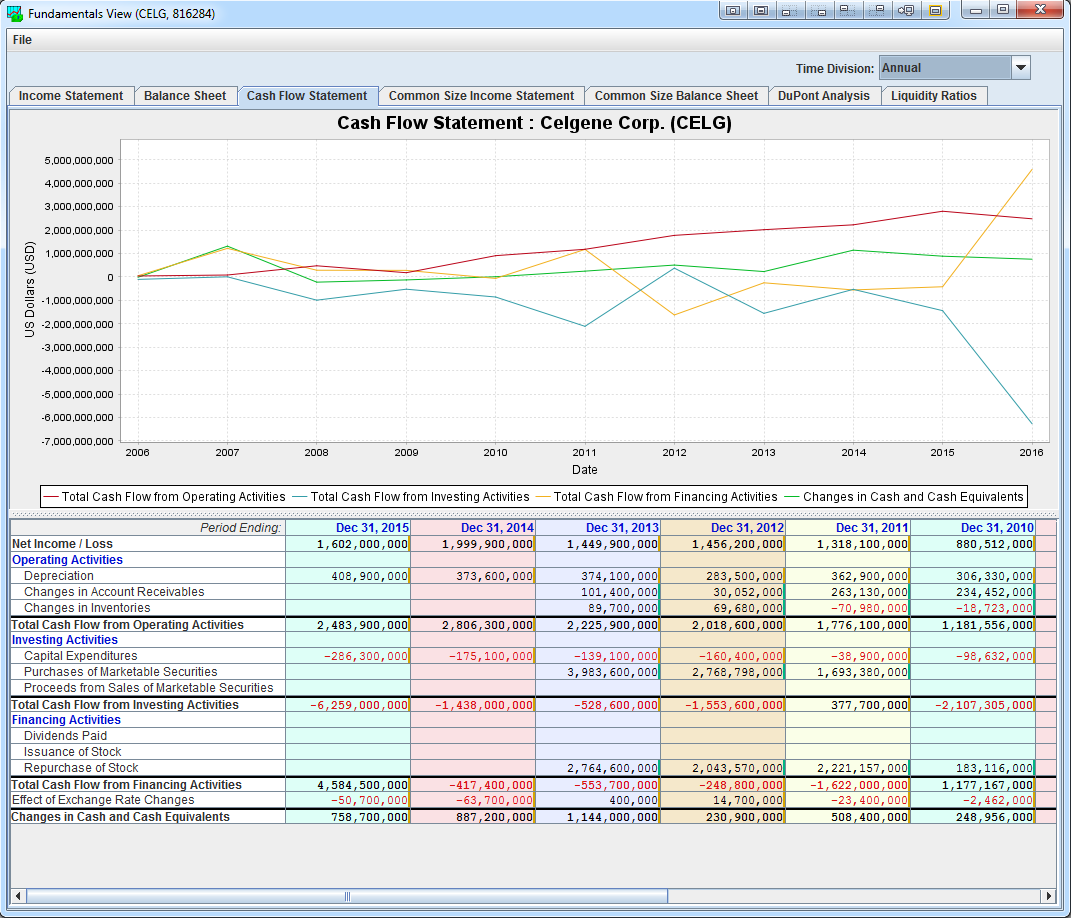
Our software can programmatically interpret and detect opportunities derived from fundamental analysis. We'll continue by detailing some of the more interesting aspects of fundamental analysis below.
Cash flow from operating activities (CFO)
Cash flow from operating activities (CFO) is a measure of the amount of cash generated by a company's normal business operations. CFO is important because it indicates whether a company is able to generate sufficient positive cash flow to maintain and grow its operations, or whether it may require external financing. OCF is calculated by adjusting net income for items such as depreciation, changes to accounts receivable, and changes in inventory.
CFO strips away certain accounting effects and is thought to provide a clearer picture of the current reality of the business operations.
Capital expenditures (CapEx)
Capital expenditures, or CapEx, are funds used by a company to acquire or upgrade physical assets such as property, industrial buildings or equipment. It is often used to undertake new projects or investments by the firm. This type of outlay is also made by companies to maintain or increase the scope of their operations. These expenditures can include everything from repairing a roof to building, to purchasing a piece of equipment, or building a brand new factory.
If a company has the financial ability to invest in itself through capital expenditure, it is easier for the company to grow. It is important to note that this is an industry specific ratio and is compared to other companies that have similar CapEx requirements.
At Prime Cognos we monitor a company's CapEx relative its depreciation expense. Companies with CapEx less than their depreciation are generally ones on the decline.
Repurchase of Stock
Share repurchase is usually an indication that the company's management thinks the shares are undervalued. The company can buy shares directly from the market or offer its shareholder the option to tender their shares directly to the company at a fixed price.
Because a share repurchase reduces the number of shares outstanding, it increases earnings per share and tends to elevate the market value of the remaining shares. At Prime Cognos we analyze how much earnings growth is from share repurchases versus how much of it is from sales and margin growth.
